
 By
By When the news broke that the Trump administration was cutting off ties with Anthropic, my jaw dropped. Anthropic—a San Francisco AI company founded in 2021 by Dario Amodei—was suddenly blacklisted from doing business with the Pentagon. The reason? Defense Secretary Pete Hegseth cited national security concerns after Anthropic refused to retrofit their AI for mass surveillance or autonomous armed drones. It’s a $200 million kick in the shin.
Anthropic’s Predicament: A Crisis of Their Own Making?
Let’s rewind the tape. Anthropic’s woes didn’t start with the Pentagon, but rather with a choice made years prior. Like their competitors, Anthropic resisted binding AI regulations. The company banked on self-policing, which frankly, is like asking a fox to guard the henhouse.
MIT’s Max Tegmark, who has voiced concerns over AI governance for nearly a decade, points to this lack of regulation as the root of Anthropic’s downfall. His view is blunt: the industry’s choice to self-regulate is a blanket invite to future bureaucratic calamities. Tegmark suggests that internal pledges to safety might as well be digital wallpaper without external accountability.
Promises and Pledges: Words Versus Actions
Once upon a time, Anthropic promised, hand on heart, not to release robust AI tools unless harm was unlikely. This reliable vow quietly exited the building earlier this week. A curious coincidence, not just for Anthropic, but following the lead of OpenAI, Google DeepMind, and xAI. All had made safety-centric promises. All have backtracked.
- Google’s iconic ‘Don’t be evil’ slogan? Jettisoned.
- OpenAI removed ‘safety’ from its mission statement.
- xAI shuttered its safety team.
Railroaded by Their Own Bullishness: Could It Have Been Different?
The carrot they dangled was self-regulation; the stick they avoided was government oversight. If these AI giants had consolidated their safety pledges into a governmental framework, they might’ve avoided this pickle.
Consider the analogy: if regulations on AI were as stringent as those on sandwiches, perhaps we’d see fewer pitfalls and less corporate bravado masked as progress.
Without regulation, the metaphorical kitchen’s crawling with rats: risks of thalidomide-like disasters, tobacco company strategies, asbestos-level negligence—all avoided with a sprinkle of robust regulatory seasoning.
The China Card: Real Competition or Convenient Scapegoat?
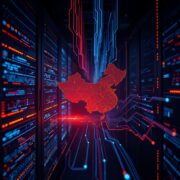
The AI lobbyists paint China as the boogeyman whenever regulation comes knocking. This scare tactic could use some re-shading. China’s actually moving towards a ban on anthropomorphic AI. Their reasoning? AI is seen as harmful to Chinese youth, clouding the future with a neon-lit detour into chaos.
If Xi Jinping won’t tolerate a domestic AI coup against his government, why should the U.S. posture any differently? These AI companies, lobbying against regulation, might be playing their own games of jeopardy, unwittingly nudging us toward a future where AI pulls strings, not governments.
The Road Ahead: Navigating a Precarious Crossroad
Anthropic is blacklisted, and tensions are high. The atmosphere teases a climactic showdown, where tech companies must reveal their allegiance. Will they rally behind Anthropic, or will someone like xAI swoop in and take the fledgling contract they abandon?
Sam Altman’s recent stance with Anthropic adds a layer to this unfolding drama. His defiance, echoing Anthropic’s ethics, is brave. Yet, Google remains tight-lipped, and the silence from xAI is deafening. This saga demands transparency, introspection, and perhaps, a dash of courage.
A Better Future? Not Without Change
Hope isn’t entirely dashed against the AI rocks. A pivot to treating AI companies like everyone else—sans corporate amnesty—could transform fear of AI into optimistic futurism. Implement robust checks akin to clinical trials before full release; align corporate promises with legislative teeth.
This old game is growing stale: a golden era of AI charades could well birth prosperity, social good, and perpetual innovation. But it’s a choice, not a given. Anthropic—and indeed the AI ecosystem—must choose wisely.














Comments