
 By
When automated license plate readers track your every move without a warrant, we cross a dangerous legal line. A federal judge recently stepped up to challenge this reality, ruling that a sheriff’s deputy violated a citizen’s Fourth Amendment rights by using Flock surveillance technology to search for her license plate without judicial approval. This landmark decision shines a harsh spotlight on the unchecked expansion of automated tracking systems.
The Rising Threat of Indiscriminate Mass Surveillance
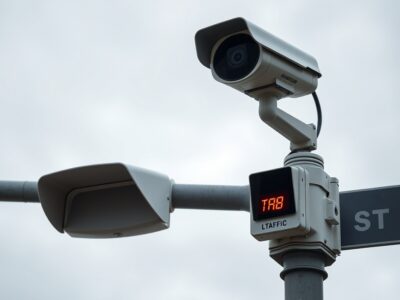
Law enforcement agencies across the country increasingly rely on automated license plate readers, such as those provided by Flock Safety, to log vehicles passing public roadways. These systems capture more than just tag numbers; they create a permanent, searchable historical record of everyday travel patterns. The recent federal ruling explicitly labels this type of data collection as indiscriminate mass surveillance, shifting the legal conversation from mere convenience to constitutional violation.
When police departments pool or access these vast databases without a warrant, they bypass protections designed to keep government overreach in check. The expectation of privacy while driving on public roads is rapidly shrinking as private-public partnerships blur the lines of tracking citizens.
Why Fourth Amendment Protections Must Adapt to AI Tracking
The Fourth Amendment was written to protect citizens from unreasonable searches and seizures, yet modern tracking tools test the limits of these foundational legal principles. Unlike a traditional officer following a suspect for a brief time, automated camera networks track thousands of innocent people simultaneously. This digital dragnet treats every driver as a potential target of interest.
- Automated systems log location, time, and vehicle characteristics continuously.
- Law enforcement can query databases historically to reconstruct past movements.
- Lack of federal oversight leaves local agencies to adopt policies with minimal transparency.
What This Means for the Future of Public Safety and Privacy
This judicial pushback arrives at a critical juncture, matching legislative efforts elsewhere to curb automated tracking technologies. Lawmakers and privacy advocates alike are demanding tighter restrictions on how police departments store and utilize data collected by companies like Flock. If higher courts uphold this ruling, police agencies nationwide will need to rethink their dependency on automated surveillance tools and secure warrants before digging into historical location databases.















Comments